You are here:Home » Learning Center » Anti-Static Raised Floor: Everything You Need to Know
Anti-Static Raised Floor: Everything You Need to Know
Views: 0 Author: Site Editor Publish Time: 2026-04-27 Origin: Site
Why Your Floor Might Quietly Destroy Your Data
Imagine walking on a dry winter carpet, touching a doorknob, and feeling a tiny shock. Now imagine that shock hitting an expensive server. It can destroy data and circuits. That’s why we need anti-static raised floors. You’ve likely walked on them without knowing—in data centers, control rooms, or hospitals. These floors aren’t just surfaces; they protect your electronics.
What Is an Anti-Static Raised Floor? (In Simple Terms)
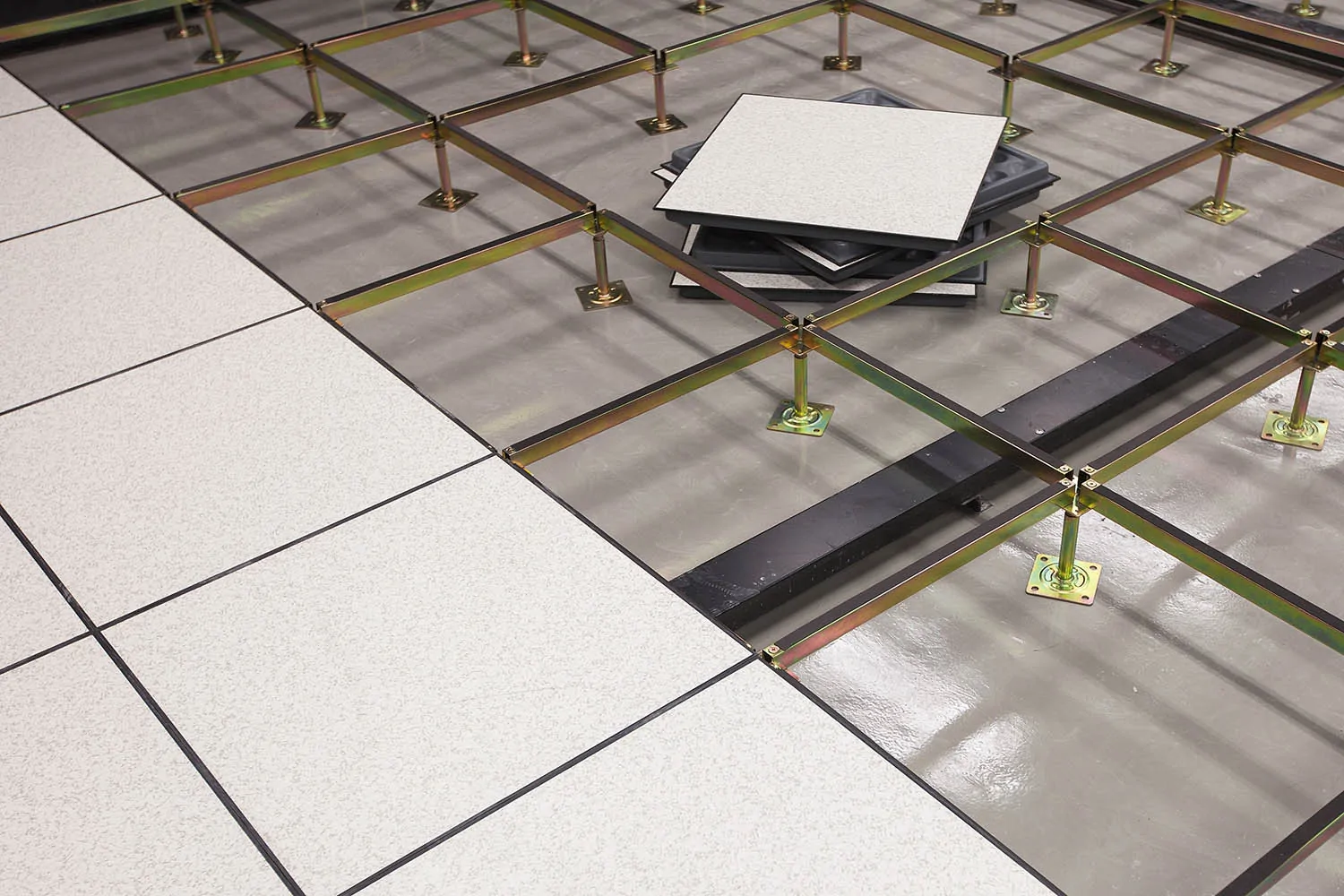
A normal concrete floor is plain. Now imagine raising it on adjustable metal legs, leaving a hidden space below. Then, instead of regular tiles, we use special panels that remove static electricity before it builds up.
That’s anti-static raised floors.
How Is It Different from a Normal Floor?
A normal floor just sits there. It doesn’t protect your electronics. But an anti-static raised floor is designed to be slightly “leaky” to electricity on purpose. It gives static a safe path to the ground—usually through a copper grid or special layer underneath. In simple words: it lets static electricity escape safely, so it won’t blow up your expensive equipment.
Why It’s Raised: Airflow Is the Hidden Hero
So why lift the floor? The space underneath (usually 15 cm to 1.2 meters tall) acts like the lungs of your server room. It lets cool air flow right to the machines that heat up, so your servers don’t overheat. You can also hide cables, power lines, and data cords down there, so no one trips. It’s like having a secret crawlspace for your building’s electronic nervous system.
The Simple Science Behind Static: Why Tiny Shocks Can Cost Big Money
Let’s get a bit technical—but keep it easy. Static electricity happens when two materials rub together and then pull apart. For example, your shoes on a floor. Your body stores that charge like a battery. When you touch metal or electronics, the charge releases all at once. That’s called ESD (Electrostatic Discharge).
ESD: The Hidden Troublemaker in Your Server Room
People can feel static at around 3,000 volts. But here’s the problem: your computer parts can be damaged by just 10 to 30 volts. You won’t feel it, but your equipment will. It’s like a bullet you never hear. Over time, ESD causes “hidden damage”—parts that slowly fail weeks later for no clear reason. Annoying, right?
Real-Life Damage Caused by Static
I once read about a telecom center that lost $2 million worth of call records because a technician walked on a regular floor. Another example: a cleanroom in a chip factory lost half a million dollars in microprocessors due to static from a plastic chair wheel. So this isn’t just theory. Static is a silent killer of electronics.
The Main Parts of an Anti-Static Raised Floor System
This clever system isn’t just one thing. It’s three parts working together.
The Pedestal (The Quiet Helper)
These are adjustable metal stands (usually steel with a zinc coating) that go up and down like a bar stool. They hold up the floor panels and can fix uneven concrete floors. Some pedestals also have conductive tops or copper strips to connect the whole floor electrically.
The Floor Panel (From Steel to Calcium Sulfate)
The panel is what you walk on. It’s not solid metal (that would be too heavy and noisy). Most of the time, it has a core—like woodcore, calcium sulfate, or aluminum —wrapped in steel or aluminum. The core gives strength; the outer layer gives conductivity.
The Conductive Coating (Where the Real Work Happens)
This is the star: a thin, permanent layer of vinyl, tile, or laminate that has carbon fibers or conductive particles mixed in. This coating sends static from your shoes to the panel, then down the pedestal to the floor below (and finally to the ground). Without this coating, you just have an expensive crawlspace.
Types of Anti-Static Raised Floors (Which One Is Right for You?)
Not all floors are the same. Here are your options, like shopping for the right tool.
Steel Encapsulated Panels
These are the everyday heroes—two thin sheets of steel glued to a lightweight core (often cement or wood). They’re strong, fire-resistant, and not too expensive. You’ll find them in server rooms and telecom closets.
Aluminum Panels
Almost as light as a feather. Aluminum panels resist rust and work well in cleanrooms or labs with harsh chemicals. They cost more but last a very long time. Think of them as aircraft-grade flooring.
Calcium Sulfate Panels
These are heavy, quiet, and very flat—great for raised floors that must not wobble (like in trading rooms or recording studios). They handle heavy rolling loads from server racks without denting.
Particle Board Core – Budget Choice
If money is tight, you might find moisture-resistant particle board wrapped in steel. It works, but keep it away from water. One leaking pipe, and you’ll have soft, spongy flooring.
5 Industries That Really Need These Floors
Data Centers – Obvious, right? Google, AWS, your local bank's server rooms.
Hospitals & Operating Rooms – Static near oxygen or anesthesia machines is very dangerous.
Electronics Manufacturing – Assembly lines for phones, laptops, and circuit boards.
Explosives & Chemical Plants – One static spark could blow up the building. Literally.
How to Check If Your Floor Is Really Anti-Static (The Shoe Test)
Here’s a simple test. Wear your normal work shoes. Walk about 20 feet on the floor. Then touch a grounded metal plate with a surface resistance meter (or a high-voltage meter if you have one). The reading should be between 10,000 and 1,000,000,000 ohms.
Lower than that? The floor is conductive—dangerous for people with pacemakers. Higher than that? The floor is insulative—static will build up. Don’t have a meter? Call a professional. Guessing can cost you.
Can You Install It Yourself? (Short Answer: No)
I get it. You watch one YouTube video and think, “I can do this.” But trust me: installing an anti-static raised floor is like building a pool table that also has to be safe from lightning.
You need laser levels, conductive glues, proper grounding to the building’s earth, and often fire marshal inspections. One missing copper strip or one loose panel ruins the whole static path. Hire a certified installer. Your servers will thank you.
Cleaning & Care: Don’t Ruin the Conductive Layer
You might think once the floor is installed, you’re done. Nope. Never wax a conductive floor—most waxes block electricity. Use only approved anti-static cleaners (or plain diluted dish soap). Never use dry dust mops (they create static). And please don’t drag metal chairs across the floor. You’ll scratch off the conductive coating.
How Much Does It Cost? (What to Budget)
Here are rough estimates in US dollars for 2025:
Basic steel/particle board panels: $8–12 per square foot
Mid-range calcium sulfate: $15–25 per square foot
Premium aluminum panels: $30–60+ per square foot
Pedestals (each): $4–8 (you need one per panel)
Professional installation: $6–10 per square foot
A 500-square-foot server room might cost $8,000 to $18,000 in total. Sounds expensive? Now think about replacing a single fried storage system worth thousands. Suddenly it’s a good deal.
Anti-Static vs. Static Dissipative vs. Conductive: What’s the Difference?
Even experts sometimes mix up these terms, but they are different:
Conductive Floor: Resistance below 10,000 ohms. Discharges static very fast. Used in explosives handling.
Static Dissipative Floor: Resistance between 10,000 and 1,000,000,000 ohms. Slower, gentler discharge. Standard for data centers.
Anti-Static Floor: A broad term that usually means static dissipative. Marketers love this word.
Still confused? Just ask your supplier for the ohms-per-square rating. That number tells the real truth.
Common Mistakes When Buying Raised Access Floors
I’ve seen some real head-scratchers. People forget to plan for ramps (wheelchairs and carts can’t do steps). Others buy smooth vinyl panels for wet areas (hello, slip-and-fall lawsuit). Or the classic: install a raised floor, then realize the ceiling is too low for standing server racks. Measure twice, order once.
Also, never assume the floor comes already grounded. You must connect the pedestal grid to the building’s main grounding system. Yes, that means hiring an electrician.
Conclusion: Peace of Mind Starts from the Ground Up
Look, we can’t control the weather or the dry air that loves making static. But we can control what’s under our feet. An anti-static raised floor isn’t glamorous. You won’t see it in home design magazines. But in a data center, hospital, or factory? It’s the quiet hero that works 24/7 so your machines don’t die from a tiny invisible zap.
So next time you walk across a springy floor with little round access plates, smile. You’re standing on a marvel of electrical safety. And if you’re planning a new build? Don’t skip this. Your future self—and your CFO—will thank you.
FAQs: Quick Answers for the Impatient Reader
1. Can I install anti-static raised floors over carpet?
No. Carpet creates static. You need a hard, level subfloor (usually concrete).
2. Do anti-static floors work with anti-static mats?
Yes, but it’s unnecessary. The floor alone does the job if properly grounded.
3. How long do these floors last?
10 to 25 years, depending on how much traffic they get. Panels can be replaced one by one.
4. Can I use anti-static laminate on top of existing concrete?
That’s a coating, not a raised floor. It helps a little, but you lose the airflow benefits.
5. Is there a cheap DIY anti-static paint?
There is, but it’s temporary and usually voids warranties. Save yourself the trouble.
This website uses cookies and similar technologies (“cookies”). Subject to your consent, we will use analytical cookies to track which content interests you, and marketing cookies to display interest-based advertising. We use third-party providers for these measures, who may also use the data for their own purposes.
You give your consent by clicking "Accept all" or by applying your individual settings. Your data may then also be processed in third countries outside the EU, such as the US, which do not have a corresponding level of data protection and where, in particular, access by local authorities may not be effectively prevented. You can revoke your consent with immediate effect at any time. If you click on "Reject all", only strictly necessary cookies will be used.