You are here:Home » Learning Center » Raised Floor Air Distribution System Explained (HVAC Optimization)
Raised Floor Air Distribution System Explained (HVAC Optimization)
Views: 0 Author: Site Editor Publish Time: 2026-06-12 Origin: Site
Modern commercial buildings are constantly evolving. Architects seek greater flexibility, facility managers demand lower operating costs, and occupants expect a comfortable indoor environment throughout the day.
To meet these goals, many buildings are moving beyond traditional ceiling-based air conditioning systems and adopting Raised Floor Air Distribution Systems, commonly known as Underfloor Air Distribution (UFAD) systems.
Think of a UFAD system as turning the entire floor into a giant air highway. Instead of sending conditioned air down from above, fresh air travels beneath the raised floor and rises exactly where occupants need it. This minor change to the airflow pattern can greatly boost energy efficiency, indoor air quality as well as the comfort of building occupants.
But how exactly does it work? And why are more buildings choosing this HVAC strategy?
Let's dive in.
Introduction to Raised Floor Air Distribution Systems
Traditional HVAC systems deliver air through ductwork installed in ceilings. While this approach has been used for decades, it is not always the most efficient way to cool or ventilate a space.
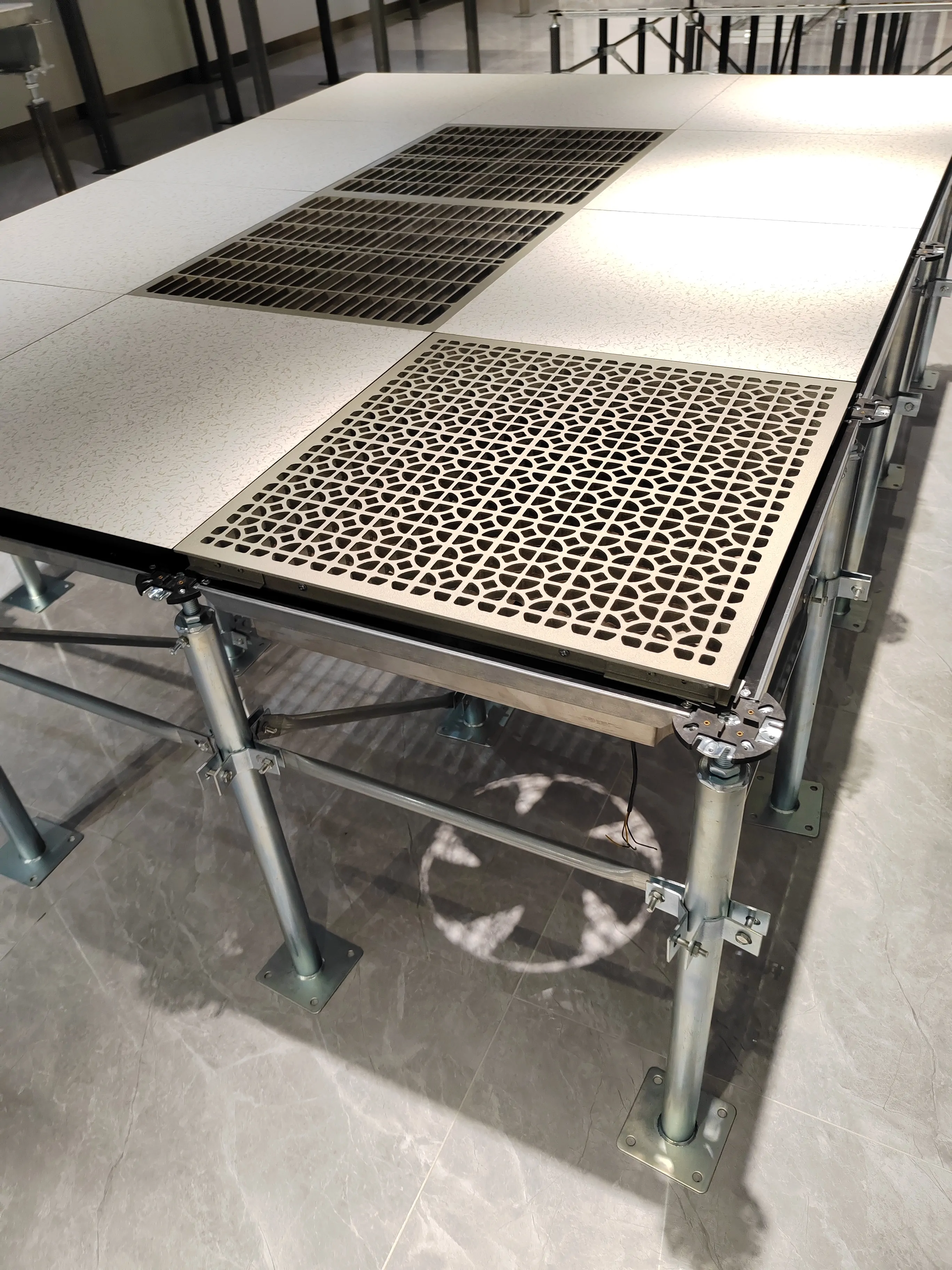
Raised Floor Air Distribution Systems take a different approach. They use the open space beneath a raised access floor as an air plenum, allowing conditioned air to be distributed directly into occupied zones through floor-mounted diffusers.
This design can reduce energy waste while providing more personalized temperature control for building occupants.
What Is a Raised Floor Air Distribution System?
An underfloor air distribution system for raised access floors is an HVAC solution. It distributes treated air via the plenum beneath raised floors, instead of using ceiling-mounted air ducts.
The void under the raised floor functions as a pressurized plenum. Treated air is fed into this chamber, and then flows into work areas through floor diffusers installed at proper locations.
This air supply mode features higher directness and better efficiency.
Basic Concept
The concept is surprisingly simple.
Unlike ceiling-based cooling systems that treat the whole room, UFAD supplies cool air near the floor. As the air gains heat, it rises naturally, taking heat, pollutants and impurities to the return air grilles.
This process creates a cleaner and more comfortable environment while using less energy.
Key Components
A typical UFAD system consists of:
Raised access floor panels
Adjustable pedestals
Underfloor air plenum
Floor diffusers
HVAC air handling units
Return air pathways
Control systems and sensors
Together, these components create a highly adaptable air distribution network.
How Underfloor Air Distribution (UFAD) Works
Understanding the airflow process is key to appreciating the benefits of UFAD systems.
Airflow Process
The process generally follows these steps:
Air is conditioned by the HVAC system.
The conditioned air enters the underfloor plenum.
Air pressure distributes the air throughout the plenum space.
Floor diffusers release air into occupied zones.
Warm air naturally rises toward the ceiling.
Return air vents remove the warm air.
This creates a continuous cycle of fresh air circulation.
Temperature Stratification
One of the most important concepts in UFAD design is temperature stratification.
Rather than mixing all room air together, UFAD systems allow warm air to rise above the occupied zone.
As a result:
Occupants remain comfortable.
Less energy is spent cooling unused upper spaces.
HVAC efficiency improves.
It's similar to watering the roots of a plant rather than spraying the entire garden.
Main Components of a Raised Floor Air Distribution System
Every successful UFAD installation relies on several critical components working together.
Raised Access Floor Panels
The raised floor creates the underfloor plenum.
Panel materials may include:
Steel cementitious panels
Calcium sulphate panels
Aluminum panels
Encapsulated woodcore panels
The panel choice often depends on load requirements and project specifications.
Air Plenum
The plenum serves as the air distribution chamber.
Unlike conventional duct systems, the entire underfloor space functions as a low-pressure air reservoir, reducing ductwork requirements and increasing flexibility.
Diffusers
Floor diffusers control airflow into occupied spaces.
Many modern diffusers allow occupants to adjust:
Air volume
Air direction
Comfort settings
This level of individual control significantly improves user satisfaction.
HVAC Equipment
The HVAC equipment supplies conditioned air to the plenum.
This may include:
Air handling units (AHUs)
Variable air volume systems (VAV)
Chillers
Heat pumps
Proper integration is essential for optimal performance.
Benefits of Raised Floor Air Distribution Systems
Why are architects and engineers increasingly specifying UFAD systems?
The answer lies in the numerous operational advantages they offer.
Improved Energy Efficiency
Energy savings are one of the biggest benefits.
UFAD systems often require:
Less fan power
Higher supply air temperatures
Reduced duct losses
Together, these factors can lower HVAC energy consumption significantly.
Better Indoor Air Quality
Fresh air is delivered directly into occupied spaces.
Meanwhile, contaminants rise naturally and are removed through return air pathways.
This process helps reduce:
Dust accumulation
Airborne pollutants
Carbon dioxide concentrations
The result is healthier indoor environments.
Enhanced Occupant Comfort
People often have different temperature preferences.
UFAD systems allow localized airflow control, giving occupants greater influence over their environment.
This improves overall workplace satisfaction and productivity.
Greater Flexibility
Office layouts change frequently.
Raised floors make it easy to:
Relocate workstations
Reconfigure diffusers
Add new services
Upgrade infrastructure
This flexibility reduces renovation costs over time.
HVAC Optimization Through UFAD Systems
HVAC optimization is where UFAD systems truly shine.
Reduced Fan Energy
Because air travels through a large plenum rather than extensive duct networks, pressure losses are lower.
Lower pressure requirements mean:
Smaller fan loads
Reduced electricity consumption
Lower operating costs
Higher Supply Air Temperatures
Traditional systems may supply air at approximately 55°F (13°C).
UFAD systems often operate effectively with supply air temperatures around 63°F to 68°F (17°C to 20°C).
This reduces cooling demand and increases chiller efficiency.
Demand-Based Air Delivery
Modern control systems can adjust airflow based on:
Occupancy
Temperature
Indoor air quality
Time schedules
This prevents unnecessary energy use.
Applications of Raised Floor Air Distribution Systems
UFAD systems are highly versatile and suitable for many building types.
Office Buildings
Modern offices benefit from:
Flexible layouts
Better comfort
Improved energy efficiency
These advantages make UFAD systems particularly attractive.
Data Centers
In data centers, underfloor spaces can support both:
Air distribution
Cable management
This dual functionality maximizes space utilization.
Raised floors increase upfront construction costs.
However, many building owners recover these costs through energy savings and operational flexibility.
Future Trends in UFAD Systems
Technology continues to improve UFAD performance.
Smart Building Integration
Modern systems increasingly connect with:
Building management systems
IoT sensors
Occupancy monitoring platforms
This enables more precise control.
AI-Driven HVAC Controls
Artificial intelligence can analyze building conditions in real time.
Future UFAD systems may automatically optimize:
Airflow
Temperature
Energy usage
Occupant comfort
This will further improve efficiency and sustainability.
Conclusion
Raised Floor Air Distribution Systems represent one of the most effective strategies for HVAC optimization in modern buildings. By utilizing the underfloor space as an air delivery plenum, UFAD systems provide conditioned air directly to occupied zones, improving energy efficiency, indoor air quality, and occupant comfort.
Compared with traditional overhead HVAC systems, UFAD offers several compelling advantages, including lower fan energy consumption, higher supply air temperatures, greater flexibility, and improved temperature control. These benefits make it an increasingly popular choice for offices, data centers, educational facilities, healthcare buildings, and other commercial environments.
Though effective deployment calls for meticulous design, rational layout of diffusers, air leak control and regular upkeep, its long-run operational advantages usually offset the upfront costs. With the continuous advancement of smart building solutions and AI-based control systems, underfloor air distribution for raised floors will gain wider application in sustainable, high-efficiency building design going forward.
For organizations seeking to improve HVAC efficiency while creating healthier and more adaptable indoor environments, a well-designed Raised Floor Air Distribution System from Dawn Modular Floor is a solution well worth considering.
This website uses cookies and similar technologies (“cookies”). Subject to your consent, we will use analytical cookies to track which content interests you, and marketing cookies to display interest-based advertising. We use third-party providers for these measures, who may also use the data for their own purposes.
You give your consent by clicking "Accept all" or by applying your individual settings. Your data may then also be processed in third countries outside the EU, such as the US, which do not have a corresponding level of data protection and where, in particular, access by local authorities may not be effectively prevented. You can revoke your consent with immediate effect at any time. If you click on "Reject all", only strictly necessary cookies will be used.