Views: 0 Author: Site Editor Publish Time: 2026-05-18 Origin: Site
Table of Contents
Toggle
Raised floors are more than just an elevated platform—they’re the unsung heroes of modern construction. Among them, HPL raised floors (High-Pressure Laminate) are gaining popularity for their durability, design flexibility, and practical benefits. But what exactly makes HPL a preferred choice for offices, data centers, and commercial spaces? Let’s dive in!
Introduction to HPL Raised Floors
Have you ever wondered how offices or server rooms maintain such clean and organized wiring under the floor? That’s where HPL raised floors come in. They provide a practical, aesthetic, and highly durable solution to manage infrastructure efficiently.
What is HPL (High-Pressure Laminate)?
HPL, or High-Pressure Laminate, is a type of flooring material renowned for its robustness and versatility. It’s designed to withstand heavy loads while offering an elegant finish.
Composition of HPL
HPL is composed of layers of kraft paper saturated with phenolic resin, topped with a decorative layer and a melamine resin surface. This layering gives it both strength and design versatility.
How HPL is Manufactured
The manufacturing process involves compressing these layers under high pressure and temperature. The result is a dense, durable, and water-resistant sheet ideal for raised flooring applications.
Core Components of HPL Raised Floors
Floor Panels
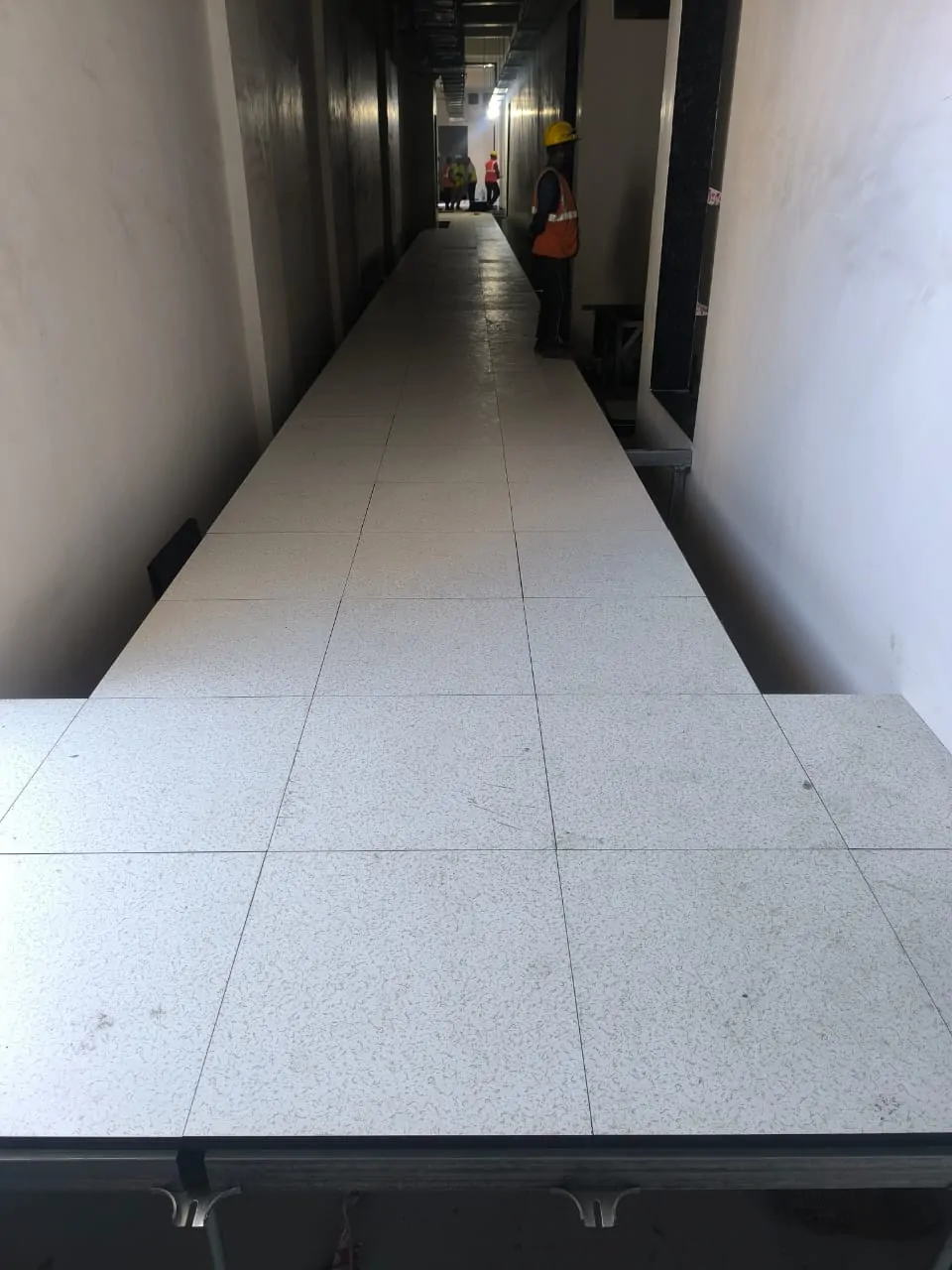
These panels form the topmost surface of the raised floor system and are typically covered with decorative laminates that provide an attractive appearance. In addition to aesthetics, they are engineered to withstand heavy foot traffic, resist scratches, and endure accidental spills from chemicals or liquids, ensuring long-lasting performance.
Pedestal System
Pedestals are adjustable supports that hold the panels in place, creating the underfloor void for cables, plumbing, and ventilation systems.
Stringers and Support Structures
Some HPL floors include stringers—horizontal beams that add extra stability and weight-bearing capacity to the raised system.
Key Features of HPL Raised Floors
Durability and Strength
HPL raised floors are designed to endure both heavy foot traffic and the weight of various office or industrial equipment without bending, warping, or cracking over time. Their robust construction ensures that the surface remains stable and reliable even under constant use, providing long-lasting durability for demanding environments.
Fire Resistance
Premium HPL panels are engineered with fire-resistant properties, providing an added layer of safety in sensitive or high-risk areas such as data centers, server rooms, and other critical facilities. This feature ensures that even in the unlikely event of a fire, the flooring helps slow down the spread and protects both equipment and personnel.
Moisture and Chemical Resistance
HPL floors are specifically designed to withstand exposure to moisture, accidental spills, and a wide range of chemicals, making them exceptionally durable and low-maintenance. Their water- and chemical-resistant surface ensures that everyday accidents or high-humidity conditions won’t damage the flooring, keeping it looking pristine and reliable for years.
Design Flexibility and Aesthetics
HPL panels come in various colors, textures, and finishes, allowing interior designers to achieve a modern, stylish look without compromising performance.
Advantages of Using HPL Raised Floors
Easy Maintenance and Cleaning
Smooth surfaces make HPL floors easy to clean, which is vital for high-traffic office spaces or healthcare facilities.
Adaptable Cable Management
The underfloor void allows for flexible routing of cables and pipes, making upgrades or changes hassle-free.
Long-Term Cost Efficiency
While the initial investment may seem high, HPL’s longevity, low maintenance, and adaptability save money over time.
Environmental Benefits
Dawn Floor HPL panels use eco-friendly materials and processes, making them a sustainable choice for green building projects.
Applications of HPL Raised Floors
Data Centers and Server Rooms
HPL raised floors allow efficient cable management and cooling, essential for tech-heavy environments.
Office Spaces and Commercial Buildings
They provide a modern, polished look while hiding cables, air ducts, and other infrastructure.
Educational Institutions and Libraries
Flexible layouts and durability make HPL floors perfect for areas that see heavy foot traffic and frequent furniture rearrangements.
Hospitals and Healthcare Facilities
HPL flooring offers hygienic, smooth, and easy-to-clean surfaces that are perfectly suited for hospitals, clinics, and other healthcare environments. Its durable construction helps prevent the buildup of dust, bacteria, and other contaminants, making it a practical and reliable choice for maintaining strict cleanliness standards.
Installation Process
Planning and Design
Accurate measurement and planning are crucial for achieving a level, uniform floor.
Panel Installation
Panels are placed on pedestals systematically, often starting from a corner to ensure proper alignment.
Adjusting Pedestals and Leveling
Pedestals can be adjusted for uneven subfloors, ensuring a perfectly flat surface.
Maintenance Tips for Longevity
Regular Cleaning and Inspection
Routine cleaning prevents scratches and surface damage while inspections catch loose panels early.
Preventive Measures Against Damage
Use protective pads under heavy furniture and avoid dragging sharp objects to prolong floor life.
Future Trends in HPL Raised Floors
Smart Flooring Integration
Sensors and IoT devices embedded in HPL floors can monitor foot traffic, temperature, and cable integrity.
Sustainable and Eco-Friendly Materials
Future HPL products are expected to use more recycled and low-emission materials, supporting sustainability goals.
Conclusion
HPL raised floors combine functionality, style, and durability. From managing complex cable networks to enhancing interior aesthetics, they are a practical solution for modern infrastructure needs. Choosing HPL ensures a versatile, long-lasting floor that adapts to your building’s evolving requirements.
This website uses cookies and similar technologies (“cookies”). Subject to your consent, we will use analytical cookies to track which content interests you, and marketing cookies to display interest-based advertising. We use third-party providers for these measures, who may also use the data for their own purposes.
You give your consent by clicking "Accept all" or by applying your individual settings. Your data may then also be processed in third countries outside the EU, such as the US, which do not have a corresponding level of data protection and where, in particular, access by local authorities may not be effectively prevented. You can revoke your consent with immediate effect at any time. If you click on "Reject all", only strictly necessary cookies will be used.